


A Midnight Go Ahead, A Pre-Dawn Arrest: How Washington Planned and Pulled Off the Maduro Operation


The United States executed a covert and meticulously prepared mission to detain Venezuelan President Nicolas Maduro, culminating in his capture during the early hours of Saturday.

AI-generated summary, reviewed by editors
The operation, authorised at the highest level, combined months of intelligence work, detailed rehearsals, and a large-scale military presence across the Caribbean region.
At 4:21 am, US President Donald Trump announced on his Truth Social platform that American forces had taken Maduro and his wife into custody, bringing to light an operation that had been quietly unfolding behind the scenes for months.
Months of planning and intelligence groundwork
According to sources familiar with the mission, elite US troops, including the Army's Delta Force, trained extensively using a full-scale replica of Maduro's safe house. The rehearsals focused on breaching heavily fortified entry points and navigating steel-reinforced interiors designed to withstand attacks.
The Central Intelligence Agency had a discreet team operating on the ground from August, gathering precise intelligence on Maduro's daily movements. Two sources said the agency also relied on an asset close to the Venezuelan leader who could track his location in real time as the mission progressed. This insight into his pattern of life was critical in determining the exact moment to strike.
Trump approved the operation four days before it was carried out, though military and intelligence planners advised waiting for clearer weather. At 10:46 pm EST on Friday, he gave the final clearance for what was internally named Operation Absolute Resolve, Joint Chiefs Chairman Dan Caine later told reporters.
A massive military buildup and coordinated strikes
The Pentagon oversaw an extensive deployment in the Caribbean, including an aircraft carrier, 11 warships, more than a dozen F-35 jets and over 15,000 troops officially assigned to anti-drug missions. A core group of senior officials, including Stephen Miller, Marco Rubio, Defense Secretary Pete Hegseth, and CIA Director John Ratcliffe, coordinated closely with the president through frequent meetings and calls.
Late on Friday night, US aircraft launched strikes on targets in and around Caracas, hitting air defence systems and other military assets. Caine said more than 150 aircraft operated from 20 bases across the Western Hemisphere, including F-35 and F-22 fighters and B-1 bombers.
"We had a fighter jet for every possible situation," Trump told Fox News Channel's "Fox & Friends."
Reuters images later showed burnt-out military vehicles at the La Carlota air base, underscoring the intensity of the preliminary strikes.
The raid on Maduro's safe house
As the air campaign unfolded, US Special Forces advanced into downtown Caracas, equipped with heavy weapons and specialised tools, including a blowtorch to cut through reinforced doors if necessary. Around 1 am EST, troops reached Maduro's compound while coming under fire. One helicopter was struck but managed to remain airborne.
Residents posted videos on social media showing helicopters flying low over the city. Once on the ground, Special Forces, accompanied by FBI agents, entered what Trump described as a "very highly guarded ... fortress."
"They just broke in, and they broke into places that were not really able to be broke into, you know, steel doors that were put there for just this reason," Trump said. "They got taken out in a matter of seconds."
Maduro taken into custody and flown out
Inside the residence, Maduro and his wife surrendered. Trump said the Venezuelan leader attempted to reach a safe room but failed to secure the door in time.
"He got bum rushed so fast that he didn't get into that," Trump said.
Some US personnel were wounded during the operation, though none were killed. As the extraction began, Rubio started notifying lawmakers that the mission was underway, with briefings taking place only after the operation had already begun.
By 3:20 am EST, helicopters carrying Maduro and his wife were over open water. Nearly seven hours after his initial announcement, Trump posted a photograph showing the captured leader blindfolded and handcuffed.
"Nicolas Maduro on board the USS Iwo Jima," Trump wrote, confirming the completion of one of the most complex US special operations in recent history.
-
 Trump Signals US Exit from Iran Within Weeks, Shifts Focus from Diplomacy to Military Goals
 -
 Iran Hits Back at Trump, Threatens Prolonged War
 -
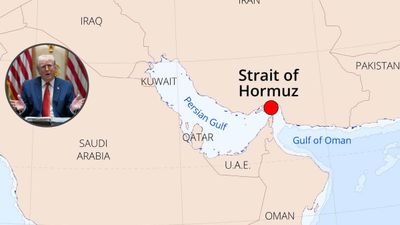 When Will Strait of Hormuz Reopen? Donald Trump’s Iran War Speech Suggests No Quick Relief
 -
 Trump's Address To Nation: Key Pointers From US President's Speech
 -
 Trump Sets Tough Terms For Ceasefire With Iran, Demands Strait Of Hormuz Be “Open, Free, Clear” Amid Conflict
 -
 Will Donald Trump Quit NATO After Iran War Rift? Europe Unites As Alliance Faces Its Biggest Crisis In Decades
 -
 What Is The ‘Stone Age’ Warning Donald Trump Issued To Iran? Says ‘No Deal, No Mercy’
 -
 Donald Trump Offers To Buy Oil From The US, Says “We Have Plenty”; Claims Iran War Will “Finish Very Fast'
 -
 Trump Addresses Nation Amid Iran War, Targets Obama Nuclear Deal, Justifies ‘Operation Epic Fury' , Watch
 -
 ‘Iran Wants Ceasefire’: Donald Trump Threatens To Send Tehran ‘Back To The Stone Age’
 -
 NASA Successfully Launches Artemis II: Know All About First Crewed Moon Mission In 50 Years
 -
 Stock Market Crashes As Sensex Falls Over 1,400 Points After Trump’s Iran War Warning, Oil Prices Surge



 Click it and Unblock the Notifications
 Sign in with Google