


When Tariffs Replace Strategy: Why India Can- and Must- Stand Firm amid 500% Trump Tariff Threat


The latest tariff threat emerging from Washington is less a calibrated act of statecraft and more a blunt political instrument, wielded with little regard for economic reality or long-standing strategic partnerships. US President Donald Trump backing a bill that could impose up to 500 per cent tariffs on countries purchasing Russian oil is not merely an escalation- it is a signal of strategic confusion. In targeting India alongside China and Brazil, the proposed sanctions risk undermining decades of carefully built Indo-US ties while exposing the limits of tariff-driven diplomacy in a multipolar world.

AI-generated summary, reviewed by editors
To be clear, India's purchase of Russian oil is not an act of geopolitical defiance; it is a rational economic decision shaped by energy security, inflation control and national interest. Since the Ukraine war disrupted global supply chains, New Delhi has diversified its energy basket to shield its economy from volatility. Expecting India to bear disproportionate economic pain to underwrite a Western conflict strategy reflects a misreading of both India's priorities and its growing global leverage.
What makes the current tariff threat more unsettling is that it is not occurring in a vacuum. The US has already imposed tariffs of around 50 per cent on select Indian goods, ostensibly linked to the same Russia-related concerns. Those measures have begun to bite, slowing shipments and unsettling exporters. The proposed 500 per cent tariff- however improbable it may sound- has therefore rattled markets because it builds on an existing punitive framework. Markets do not wait for policy certainty; they price in risk, and that is precisely what was visible in the sharp fall across Indian equities, particularly metals, oil and industrial stocks.
Yet this is where Washington's approach appears fundamentally misguided. Tariffs of this scale are not surgical sanctions; they are economic shock weapons. They do not merely hurt the target country- they distort global trade, raise costs for American consumers, and accelerate the very decoupling the US claims to fear. Penalising India, the world's fastest-growing major economy and a key Indo-Pacific partner, weakens the broader strategic architecture the US has spent years trying to build as a counterweight to China.
India, however, is not the India of the 1990s- vulnerable, inward-looking and dependent on a narrow set of markets. Over the last decade, New Delhi has deliberately pursued strategic autonomy, not as a slogan but as an economic doctrine. From boosting domestic manufacturing under the "Make in India" push to expanding infrastructure at scale, India has been laying the groundwork for resilience. The current turbulence only reinforces the logic of that path.
Crucially, the US is no longer India's only window to the world. Asia itself offers a vast and growing marketplace- from Southeast Asia to West Asia- where energy, manufacturing and technology linkages are deepening. The BRICS grouping, often dismissed in Western commentary, is steadily evolving into an alternative economic platform, facilitating trade in local currencies and reducing overdependence on the dollar-dominated system.
Meanwhile, the European Union, despite its alignment with Washington on Ukraine, remains commercially pragmatic. India's trade and technology engagement with Europe has expanded significantly, driven by mutual recognition that supply chain diversification is no longer optional.
This diversification is India's strongest hedge against tariff coercion. No single market, however large, can now dictate India's economic trajectory. While short-term volatility is unavoidable- markets have shown as much- the long-term fundamentals remain intact. Domestic consumption, infrastructure spending and a steadily expanding manufacturing base continue to anchor growth. Tariff threats may dent sentiment, but they cannot reverse structural momentum.
There is also a political dimension Washington may be underestimating. Heavy-handed economic pressure tends to harden, not soften, public opinion in democracies. In India, such measures are more likely to strengthen the argument for self-reliance and strategic distance than to compel policy reversal. History suggests that nations rarely surrender core economic interests under external pressure; they adapt, diversify and, eventually, retaliate through alternative alignments.
For the United States, the choice is stark. It can treat India as a transactional lever in its Russia policy, or it can recognise India as a partner with its own compulsions and constraints. Tariffs of intimidation may play well in domestic political theatre, but they are a poor substitute for nuanced diplomacy in a fractured global order.
India, for its part, must absorb the shock without panic. The tariff challenge is real, but so is India's capacity to withstand it. In a world drifting towards economic blocs and regionalised trade, resilience- not compliance- will define success. And that is a lesson Washington would do well to relearn before tariffs end up weakening alliances rather than strengthening them.
-
 “Not Going To Be There Too Much Longer”: Trump Signals Endgame In Iran War
 -
 Trump Signals US Exit from Iran Within Weeks, Shifts Focus from Diplomacy to Military Goals
 -
 Trump Sets Tough Terms For Ceasefire With Iran, Demands Strait Of Hormuz Be “Open, Free, Clear” Amid Conflict
 -
 Will Donald Trump Quit NATO After Iran War Rift? Europe Unites As Alliance Faces Its Biggest Crisis In Decades
 -
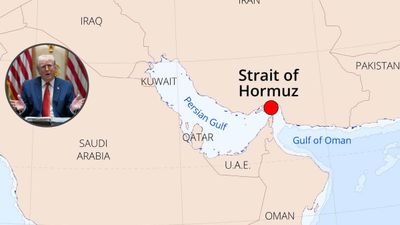 When Will Strait of Hormuz Reopen? Donald Trump’s Iran War Speech Suggests No Quick Relief
 -
 What Is The ‘Stone Age’ Warning Donald Trump Issued To Iran? Says ‘No Deal, No Mercy’
 -
 Trump's Address To Nation: Key Pointers From US President's Speech
 -
 Donald Trump Offers To Buy Oil From The US, Says “We Have Plenty”; Claims Iran War Will “Finish Very Fast'
 -
 Trump Addresses Nation Amid Iran War, Targets Obama Nuclear Deal, Justifies ‘Operation Epic Fury' , Watch
 -
 ‘Iran Wants Ceasefire’: Donald Trump Threatens To Send Tehran ‘Back To The Stone Age’
 -
 ‘Go Get Your Own Oil’: Trump Slams Nations Hit By Hormuz Fuel Crisis For Refusing To Back Iran Strikes
 -
 Trump Warns Iran Of Possible Attacks On Energy Sites Amid Israel-Hezbollah Conflict



 Click it and Unblock the Notifications
 Sign in with Google