


UGC Row: Supreme Court Halts UGC Equity Rules, Asks Government To Rewrite Regulations


The Supreme Court of India on Thursday stayed the implementation of the University Grants Commission (Promotion of Equity in Higher Education Institutions) Regulations, which were notified on January 23, 2026.

AI-generated summary, reviewed by editors
The regulations were challenged by several petitioners, who argued that the rules were arbitrary, exclusionary, and discriminatory. They also claimed that the regulations violated the Constitution as well as the University Grants Commission Act of 1956.
What the Chief Justice Said
Chief Justice Surya Kant said the unity of the country must be reflected in schools and universities. He cautioned that unclear regulations in sensitive areas like education could have serious consequences.
The CJI remarked that if the court does not intervene at this stage, the regulations could divide society and lead to long-term harm. He added that the goal should be to ensure fairness without creating new forms of exclusion.
The court also asked Solicitor General Tushar Mehta to consider the formation of a committee of eminent jurists, academicians, and social experts to review the regulations so that society can "grow together and without such differentiators."
Arguments Against Regulation 3(c)
Senior advocate Vishnu Jain, appearing for the petitioners, challenged Regulation 3(c), which defines caste-based discrimination.
He argued that the provision violates Article 14 of the Constitution, which guarantees equality before the law.
He told the court that discrimination cannot be presumed to occur only against one segment of society. According to him, the regulation wrongly assumes that caste-based discrimination happens only against SC, ST, and OBC communities, while excluding the general category from protection.
He sought a stay on this definition, stating that a statute cannot pre-judge who can be a victim and who cannot.
Petitioners' Submissions Before the Court
Advocate Vineet Jindal, one of the petitioners, said the Chief Justice appreciated the arguments placed before the court. He pointed out two major concerns:
First, Regulation 3(c) excludes the general category from the definition of caste-based discrimination, which sends a message that discrimination can occur only in one direction.
Second, the composition of the Equal Opportunity Committees under Regulation 18 does not include representation from the general community. He argued that such exclusion makes the framework one-sided and discriminatory.
The CJI agreed that these concerns require serious examination and suggested that the regulations must be amended.
Concerns Raised Over Implementation in Universities
Advocate Satyam Pandey warned that if the regulations are implemented in their current form, new students entering universities could face confusion and misuse of complaint mechanisms.
He said students may feel compelled to file complaints without clarity, which could lead to unnecessary conflict on campuses. He added that university administrations may interpret the rules differently, putting some students at a disadvantage.
The court took note of these concerns and directed the Centre to consult more stakeholders before moving ahead.
What the Court Ordered
After hearing all sides, the Supreme Court passed the following directions:
The UGC Equity Regulations, 2026 will remain in abeyance
The UGC Anti-Discrimination Regulations, 2012 will continue to apply
Notices were issued to the Union government and the UGC
The matter was listed for March 19 for further hearing
The Solicitor General accepted notice on behalf of the Centre
The court said petitioners cannot be left without remedy and stressed the need for a balanced, inclusive framework.
Court's Final Observations
The bench observed that the language of the regulations must be carefully examined by experts. It said the wording appears vague and open to exploitation, and any regulation affecting higher education must be clear, neutral, and inclusive.
The Chief Justice concluded by saying that India must avoid any system that could lead to segregation in educational institutions, and reforms must strengthen unity rather than weaken it.
-
 Has Pakistan Lifted The Ban on Dhurandhar 2? Find Out The Truth
 -
 Gold Silver Rate Today, 4 April 2026: Check City-Wise Gold, Silver Prices and MCX Trend
 -
 Hyderabad Weather Update: IMD Issues Yellow Alert As Thunderstorms Likely Across Telangana Till April 7
 -
 Latest Gold Silver Rate In Hyderabad, 4 April 2026: Fresh 18K, 22K, 24K Gold and Silver Prices
 -
 Gold Rate Today 4 April 2026: Check Fresh IBJA Gold Rates, Tanishq, Kalyan, Malabar, Joyalukkas Prices
 -
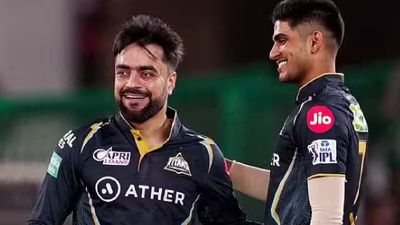 IPL 2026 GT vs RR: Shubman Gill Out, Rashid Khan Captains Gujarat Titans vs Rajasthan Royals At Ahmedabad
 -
 How Iran Brought Down US Military A-10 ‘Warthog’: IRGC Releases Video
 -
 Dhurandhar 2 Box Office Collection: Ranveer’s Flick Defies Weekday Dip, Charges Ahead Towards ₹1,000 Cr India
 -
 Karnataka 2nd PUC Results On This Date, Check 2nd PUC Result 2026 Karnataka Date And Time
 -
 US Air Force’s ‘Swiss Army Knives’ Lead High-Risk Search And Rescue Mission For Missing Pilot In Iran
 -
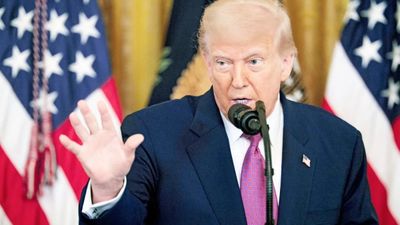 We’re In War: Donald Trump Says US Aircraft Loss Won’t Derail Iran Talks
 -
 India Says Iranian Oil Supply Secure, Rejects Tanker Diversion Reports Linked To Payment Issues



 Click it and Unblock the Notifications
 Sign in with Google