


‘Good Policies Don’t See Borders’: Kejriwal On Punjab Model Being Raised In Haryana Assembly


Aam Aadmi Party National Convener Arvind Kejriwal on Wednesday highlighted that policies of the Punjab government were discussed in the Haryana Assembly, calling it a proud moment for the party and arguing that the debate showed how Punjab’s approach to governance was drawing attention beyond state borders.
Kejriwal linked this discussion directly to a flagship Punjab initiative, the "Jiska Khet, Uski Ret" policy, which the Bhagwant Mann government presents as a key reform targeting sand mining. According to AAP, the policy aims to protect farmers’ interests while reducing the space for illegal sand mining networks.
AI-generated summary, reviewed by editors

Punajb model of governance debate and "Jiska Khet, Uski Ret" policy
Under the "Jiska Khet, Uski Ret" framework, farmers in Punjab are allowed to take sand from their own fields for personal use. They are not required to deal with contractors or intermediaries, a design meant to cut exploitation and to weaken sand mining mafias that have long operated around construction material.
Punajb model of governance, farmers and public welfare–oriented work
In a social media post, Kejriwal said it was notable that the Haryana Assembly had recognised the "public welfare–oriented work" of the AAP-led Punjab government. "It is a matter of pride that today, even in the Haryana Assembly, the pro-people work of the Punjab AAP government is being discussed," Kejriwal wrote, stressing that the policy helped secure farmers’ fair access to natural resources.
Kejriwal argued that such steps showed how a government focused on the public interest could produce visible outcomes on the ground. He said the sand policy had helped restrict illegal activities linked to mining and was being showcased by AAP as part of a wider Punjab governance template that emphasises transparency and daily benefits for ordinary citizens.
The reference to the Haryana debate comes as AAP continues to project Punjab as an example of its administrative style. Since forming the government under Chief Minister Bhagwant Mann, the party has highlighted initiatives in power supply, education reforms, health services, and resource management as pillars of what AAP terms the "Punjab model" of governance.
Kejriwal also suggested that state-level innovations often travel beyond their origin. "Good policies do not see borders," Kejriwal said, adding that other states were now debating and examining the "Punjab model". While detailed political responses from Haryana leaders were not immediately available, the comments underline AAP’s effort to use Punjab’s record in its wider political messaging and expansion plans.
-
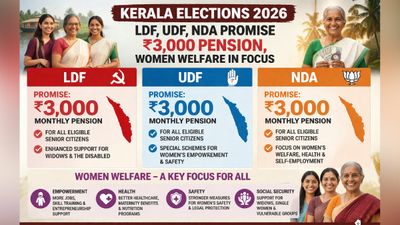 Kerala Elections 2026: LDF, UDF, NDA Promise ₹3,000 Pension, Women Welfare in Focus
 -
 Can Raghav Chadha Be The PM? How His Parliament Speeches On Real Issues Won Public Attention
 -
 Amit Shah Leads Massive Bhabanipur Roadshow, Urges Fear-Free Voting And Backs Suvendu Adhikari Against TMC
 -
 Stock Market Crash: Sensex, Nifty Fall as ₹51.7 Lakh Crore Wiped Out Amid Global Tensions
 -
 April 1 Rule Changes: PAN, New Tax Law, ATM, FASTag, Cards to Impact Millions, What’s Changing?
 -
 Iran Crisis: Over 5.98 Lakh Indians Have Returned Home, Confirms Govt
 -
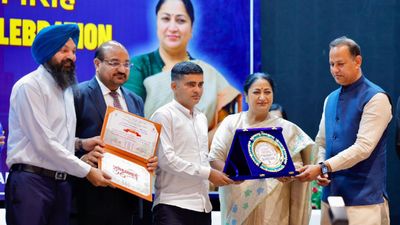 Delhi CM Rekha Gupta Attends 122nd Foundation Day of Indian Agricultural Research Institute
 -
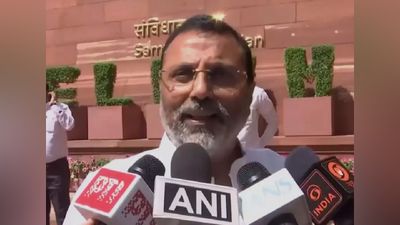 Nishikant Dubey Apologises Over Remarks on Biju Patnaik Amid Political Row
 -
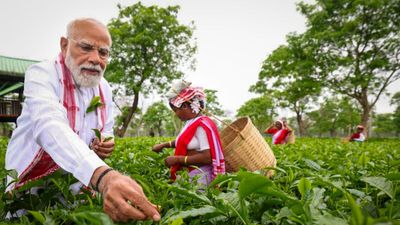 PM Modi Plucks Tea Leaves in Assam, Joins Workers Ahead of Poll Rallies
 -
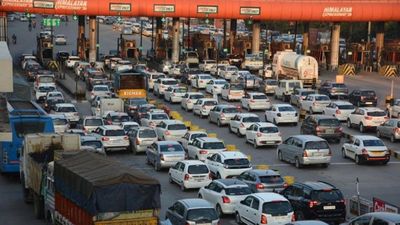 Toll Rates Revision By NHAI Tied To WPI Impacts Delhi Gurgaon Expressway Dwarka Expressway And Sohna Highway
 -
 West Bengal’s Vote Share vs Seat Share Paradox: Reading 2021, Reframing 2026
 -
 TVK Chief Vijay Booked For Alleged Election Code Violation, Accused Of Blocking Ambulance During Poll Campaign



 Click it and Unblock the Notifications
 Sign in with Google