


India-US Trade Deal Put On Hold As Donald Trump Resets Global Tariff Framework


India and the United States will formally sign their proposed trade deal only after Washington finalises and implements its new tariff framework, Commerce Secretary Rajesh Agrawal said on Monday during a trade data briefing.

AI-generated summary, reviewed by editors
His remarks come at a time when both countries are still negotiating the finer details of the bilateral trade pact, even as the US under President Donald Trump reshapes its global tariff structure.
India, US Continue Talks As Deal Awaits Tariff Reset
Agrawal said the actual signing of the India-US trade deal will happen only after the US re-establishes its revised global tariff rates. He noted that President Donald Trump is currently working on recreating the global tariff architecture, making it clear that the timing of the agreement is tied directly to the new American tariff regime.
India and the United States had launched negotiations for a bilateral trade agreement (BTA) on February 13, 2025, during talks between President Donald Trump and Prime Minister Narendra Modi. Later that month, both leaders agreed to move ahead with an interim trade agreement and issued a joint statement outlining the broad terms of the arrangement.
Under that interim understanding, Trump reduced tariffs on Indian goods from 25% to 18%. He also removed the additional 25% duty that had earlier been imposed on India over New Delhi's purchase of Russian oil.
Trump's Tariff Overhaul Reshapes Trade Roadmap
The path to the final deal has been complicated by legal and policy changes in the United States. The US Supreme Court struck down Trump's earlier tariff policy, which had been introduced under the 1977 International Emergency Economic Powers Act (IEEPA) to justify new taxes on imports from nearly every country.
Even after that ruling, however, many countries continue to face steep sector-specific tariffs from Washington. Trump has relied on Section 232 of the 1962 Trade Expansion Act to impose duties on steel, aluminium, cars, copper and lumber, arguing that these imports pose national security risks.
Soon after the Supreme Court verdict, Trump unveiled a fresh universal tariff of 10%, despite the earlier court setback, and signalled that further reciprocal duties could be pursued under a different legal route. His administration has also opened investigations that may pave the way for country-specific tariffs.
Nearly a month after the ruling, Trump made it clear he was not backing down from his tariff agenda.
"The decision that mattered most to me was TARIFFS! The Court knew where I stood, how badly I wanted this Victory for our Country, and instead decided to, potentially, give away Trillions of Dollars to Countries and Companies who have been taking advantage of the United States for decades. Our Supreme Court has made these Countries very happy but, as the Court pointed out, I have the absolute right to charge TARIFFS in another form, and have already started to do so,"
Fresh US Probe Raises New Concerns For India
Alongside the trade deal talks, India is also reviewing the legal implications of a new American investigation into what the US describes as excess industrial capacity among major trading partners.
Agrawal said India is examining the impact of the US move, which comes amid wider geopolitical uncertainty linked to the Middle East conflict. The Office of the US Trade Representative has launched an 'unfair trade practices' investigation into excessive industrial capacity across 16 economies, including India, China, the European Union, Japan, South Korea and Mexico.
The probe has put India and several other major exporters under fresh scrutiny and could potentially lead to new tariffs as early as this summer.
Final Deal Hinges On US Policy Clarity
For now, India and the US remain engaged in discussions over the structure and terms of the bilateral trade agreement. However, the formal signing will depend on when the Trump administration completes its tariff reset and brings its new global framework into force.
With Washington pursuing a fresh round of tariff actions and investigations, the final shape of the India-US trade deal is likely to be influenced as much by legal developments in the US as by the ongoing negotiations between the two countries.
-
 Trump's Address To Nation: Key Pointers From US President's Speech
 -
 Trump Addresses Nation Amid Iran War, Targets Obama Nuclear Deal, Justifies ‘Operation Epic Fury' , Watch
 -
 Iran Hits Back at Trump, Threatens Prolonged War
 -
 Donald Trump Offers To Buy Oil From The US, Says “We Have Plenty”; Claims Iran War Will “Finish Very Fast'
 -
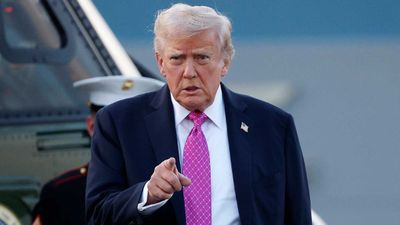 What Is The ‘Stone Age’ Warning Donald Trump Issued To Iran? Says ‘No Deal, No Mercy’
 -
 How Iran Brought Down US Military A-10 ‘Warthog’: IRGC Releases Video
 -
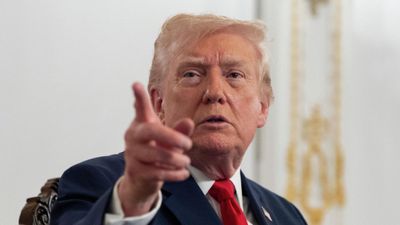 Will Donald Trump Quit NATO After Iran War Rift? Europe Unites As Alliance Faces Its Biggest Crisis In Decades
 -
 Gold Rate Today in Bangalore, April 4, 2026: IBJA Rates, 22K Gold Prices at Bhima, Abharan, Jos Alukkas, GRT
 -
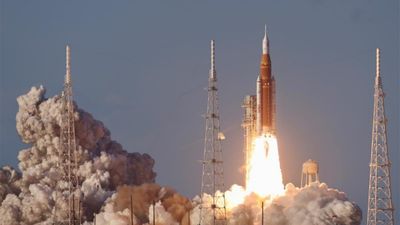 NASA Successfully Launches Artemis II: Know All About First Crewed Moon Mission In 50 Years
 -
 Stock Market Crashes As Sensex Falls Over 1,400 Points After Trump’s Iran War Warning, Oil Prices Surge
 -
 Iran Shoots Down Second US F-35 Fighter Jet, Pilot Survival Unlikely
 -
 Iran Names 8 Gulf, Jordan Bridges as Possible Targets After Deadly Karaj Strike



 Click it and Unblock the Notifications
 Sign in with Google