


From $2 Trillion in 2014 to $4.18 Trillion Today: How India’s GDP Doubled in 10 Years


India's rise to the world's fourth-largest economy is the result of a decade-long expansion marked by sustained GDP growth, structural reforms and strong domestic demand.

AI-generated summary, reviewed by editors
From being a mid-ranked global economy in 2014, India has more than doubled the size of its economy over the past 10 years, steadily climbing the global GDP ladder.
In 2014, India's nominal GDP stood at around USD 2 trillion and the country was ranked 10th among the world's largest economies. A decade later, India's GDP has reached USD 4.18 trillion, helping it overtake Japan and secure the fourth position globally, according to a government release highlighting key economic reforms and performance indicators.
From 10th in 2014 to 4th Today: A Decade of Expansion
India entered 2014 as the world's 10th-largest economy by nominal GDP, trailing major economies such as the United States, China, Japan, Germany, the United Kingdom and France. Over the next decade, consistent growth enabled India to move ahead of several developed economies.
The government said, "With GDP valued at USD 4.18 trillion, India has surpassed Japan to become the world's fourth-largest economy, and is poised to displace Germany from the third rank in the next 2.5 to 3 years with a projected GDP of USD 7.3 trillion by 2030."
This climb reflects not just size but also the pace of expansion, with India emerging as the fastest-growing major economy during this period.
How India's GDP More Than Doubled in 10 Years
India's nominal GDP has grown from roughly USD 2 trillion in 2014 to over USD 4 trillion in 2025, translating into an expansion of more than 100 percent in a decade. This growth was powered by rising private consumption, infrastructure spending, expansion of the services sector and policy reforms aimed at improving the business environment.
In recent quarters, growth momentum has remained strong. India's real GDP grew 8.2 per cent in the second quarter of 2025-26, up from 7.8 per cent in the first quarter and 7.4 per cent in the final quarter of the previous fiscal. The government noted that GDP expansion touched a six-quarter high in Q2 of 2025-26, underlining resilience amid global trade uncertainties.
Domestic drivers played a central role, with robust consumer demand and improving urban consumption supporting overall economic activity.
Global Agencies Back India's Long-Term Growth Story
International agencies have consistently highlighted India's growth prospects over the past decade and continue to project strong momentum ahead. The World Bank has projected India's growth at 6.5 per cent in 2026.
Moody's expects India to remain the fastest-growing G20 economy, forecasting growth of 6.4 per cent in 2026 and 6.5 per cent in 2027. The International Monetary Fund has raised its projections to 6.6 per cent for 2025 and 6.2 per cent for 2026.
Other agencies have also revised their outlook upwards. Organisation for Economic Co-operation and Development sees growth of 6.7 per cent in 2025, while Asian Development Bank has lifted its 2025 forecast to 7.2 per cent. Fitch Ratings has raised its FY26 projection to 7.4 per cent, citing strong consumer demand.
Inflation, Jobs and Credit Trends Support Growth
The government release also highlighted improvements in key macroeconomic indicators over the decade. Inflation remains below the lower tolerance threshold, unemployment has been on a declining trajectory and export performance continues to improve.
Financial conditions have stayed supportive, with strong credit flows to the commercial sector. Demand conditions remain firm, driven by a steady strengthening of urban consumption.
"India is among the world's fastest-growing major economies and is well-positioned to sustain this momentum. With the ambition of attaining high middle-income status by 2047 the centenary year of its independence the country is building on strong foundations of economic growth, structural reforms and social progress," the government said.
From its 10th rank in 2014 to fourth place today, India's economic journey over the last 10 years reflects a combination of scale, speed and structural change that has reshaped its position in the global economy.
-
 RCB Vs CSK IPL 2026 Tickets At Chinnaswamy: Official Sale, Metro Perks, And Entry Guidelines
 -
 Hyderabad Gold Silver Rate Today, 1 April 2026: Check 18K, 22K, 24K Gold And Silver Prices In Nizam City
 -
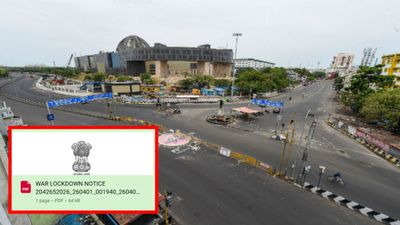 War Lockdown Notice Goes Viral Over Iran Claims, Sparks Panic Online
 -
 Hyderabad Gold Silver Rate Today, 31 March 2026: Gold And Silver See Fresh Movement, Check Latest City Rates
 -
 Gold Silver Rate Today, 1 April 2026: City-Wise Prices Rise Sharply, MCX Gold And Silver Surge
 -
 Laid Off After 20 Years Via Email: Oracle Faces Criticism As Viral Post Highlights Cancer Patient’s Job Loss
 -
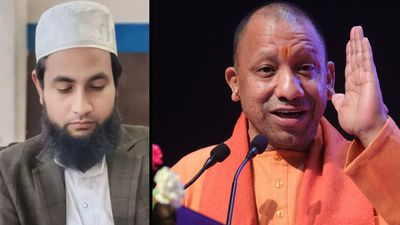 UP STF Nabs Maulana Abdullah Salim Over Controversial Comment On CM Yogi's Mother
 -
 Iran-US War: Donald Trump’s Missteps And The NATO Paradox
 -
 Iran Threatens To Hit US Companies in Region From April 1, Names Microsoft, Apple, Tesla, Boeing
 -
 Trump Says Iran Is ‘Incapable’ Of Building Nuclear Weapon, US Will Be Out ‘Pretty Quickly’
 -
 Thunderstorm Warning In Delhi NCR: IMD Issues Orange Alert Amid Sudden Weather Shift
 -
 Tamil Nadu Election Predictions: AIADMK Fails To Unseat Stalin's DMK, Says Pre Poll Survey



 Click it and Unblock the Notifications
 Sign in with Google