


Opinion: How Pakistan’s Iran ‘Peace Card’ Could Turn Into Anti-India Leverage


In the shifting sands of global geopolitics, transactional diplomacy often trumps long-term strategic alignment. Pakistan's recent positioning as a facilitator in backchannel engagement between the United States and Iran is a case in point. While Islamabad may project this as a moment of diplomatic resurgence, the deeper question for New Delhi is more unsettling: what price might Washington be willing to pay Pakistan for this "favour"?
To understand the potential implications, one must first recognise the pattern. Pakistan's military establishment, led by Asim Munir, has historically leveraged geopolitical crises to reinsert itself into Washington's strategic calculus.
AI-generated summary, reviewed by editors

His rhetoric last year-branding Kashmir as Pakistan's "jugular vein" was not merely domestic posturing but a signal of Islamabad's enduring fixation. In that address, Munir went beyond the standard "Kashmir is our jugular vein" narrative. He drew a civilisational contrast, suggesting that Muslims and Hindus are fundamentally different, a remark that was seen by many strategic observers as an attempt to harden divisions and justify Pakistan's continued hostility towards India.
Such statements are not made in a vacuum. In Pakistan's power structure, where the military establishment dictates both security and foreign policy, messaging of this nature often precedes escalatory actions on the ground.
Yet, what followed was equally telling. As tensions escalated and India launched Operation Sindoor, Washington under Donald Trump was quick to intervene, pushing for de-escalation while simultaneously projecting itself as the indispensable "deal-maker." This duality-publicly claiming credit for averting a nuclear crisis while privately engaging Pakistan reflects a familiar American approach: crisis management over accountability.

Against this backdrop, Pakistan's role in facilitating US-Iran engagement is unlikely to be altruistic. Islamabad will expect tangible returns, and history suggests that these will be calibrated in ways that impact India's strategic space.
Water as Leverage: The Indus Waters Treaty Pressure
One of the most immediate pressure points is the Indus Waters Treaty. Following India's decision to place aspects of the treaty in abeyance after repeated cross-border provocations, Pakistan has been desperate to restore the status quo. Here, the United States could step in-not as a neutral arbiter, but as a "broker" seeking quick wins.
Trump's well-known penchant for headline-grabbing deals could translate into subtle pressure on New Delhi to resume negotiations under the guise of regional stability.
- 'BJP Brought People From Uttar Pradesh For Assam Polls Due To Lack Of Confidence': Claims Mamata Banerjee
- Kerala Elections: From Mohanlal To Mammootty, Celebs Stand In The Queue Like Common Man To Cast Votes
- Congress Manifesto for TN Assembly Elections 2026, Rahul Gandhi Missing from Campaign
- Voting Ends In Assam, Kerala And Puducherry With Record Turnout - Is There An SIR Impact?
- Mohanlal And Mammootty Stand In Queue To Vote In Kerala Elections 2026, Skip VIP Privileges And Sets Example
Reopening the Kashmir Playbook
Equally concerning is the potential revival of third-party mediation narratives on Kashmir. India's position has remained unequivocal: the issue is strictly bilateral. However, Trump's repeated offers to mediate, which was dismissed firmly by New Delhi earlier, may find renewed life if Pakistan successfully rebrands itself as a "peace facilitator" in West Asia.
By elevating Pakistan's diplomatic profile, Washington risks inadvertently legitimising Islamabad's attempts to internationalise Kashmir. Whether through backdoor discussions at multilateral forums or a calibrated shift in rhetoric, even a semblance of "neutrality" from the US would be interpreted in Rawalpindi as a strategic victory.
Military and Intelligence Dividends
For Pakistan's military establishment, diplomacy is often a means to a more tangible end: hardware and intelligence. A warming of ties with Washington could see renewed support for Pakistan's ageing F-16 fleet, ostensibly for counter-terrorism. Yet, as history has shown, such capabilities rarely remain confined to their stated purpose.
Moreover, a revival of intelligence cooperation between American agencies and Pakistan's ISI would enhance Islamabad's surveillance capabilities along the Line of Control. For India, this raises the spectre of asymmetric advantages being quietly restored under the cover of counter-terror collaboration.

Economic Lifelines with Strategic Intent
Pakistan's fragile economy is another arena where it will seek dividends. With mounting debt and dwindling reserves, Islamabad remains heavily reliant on international financial institutions. Here again, US could come to Islamabad's rescue.
Support for favourable terms from the IMF or World Bank would not merely stabilise Pakistan, it would enable it to sustain its adversarial posture against India. Add to this the possibility of preferential trade access to US markets, and one sees the contours of a broader strategy: keeping Pakistan economically afloat as a counterweight, even if imperfect, to India's rise.
The Risk of Re-Hyphenation
Perhaps the most significant long-term risk lies in what might be termed the "re-hyphenation" of India and Pakistan in US policy. Over the past two decades, New Delhi has worked painstakingly to delink its global standing from Islamabad's. Strategic partnerships, defence cooperation, and economic ties have all reinforced this separation.
However, Pakistan's renewed utility, whether in Afghanistan yesterday or Iran today, creates a temptation in Washington to revert to an older framework of "balance." In such a scenario, gains made by India could be offset by concessions to Pakistan in the name of regional stability.

A Transactional Reality
None of this suggests an imminent rupture in India-US relations. The partnership remains underpinned by shared concerns over China and converging economic interests. Yet, it would be naïve to ignore the transactional nature of American foreign policy, particularly under leaders like Trump.
For Pakistan, the calculus is straightforward: every geopolitical service rendered must yield strategic returns, preferably at India's expense. For India, the challenge is more complex - how to safeguard its interests in a landscape where allies can also be opportunistic actors.
In the end, Pakistan's Iran mediation may well prove to be less about peace in West Asia and more about leverage in South Asia. The real test will be whether Washington recognises the long-term costs of short-term bargains or once again chooses expediency over principle.
-
 US-Iran ceasefire: Congress urges Centre to consult opposition on a unified national approach
 -
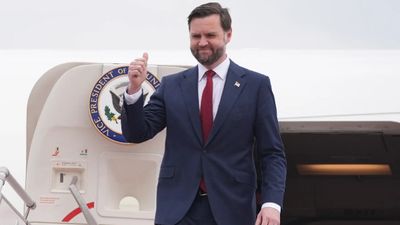 JD Vance Heads US Push for Iran Ceasefire as Talks Begin in Pakistan
 -
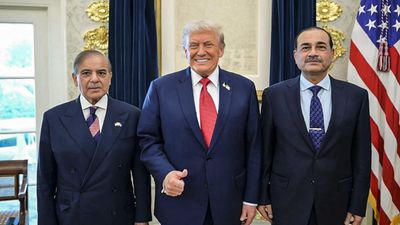 How US Pushed Pakistan For a Deal With Iran Over Oil Price Concerns
 -
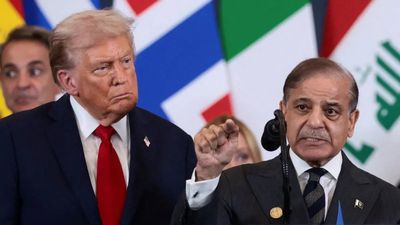 Islamabad Sealed Ahead Of US-Iran Peace Talks, But Iran’s Presence Still In Doubt
 -
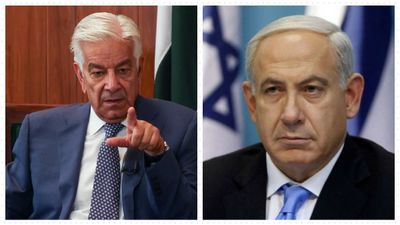 Israel Blasts Pakistan Minister's 'Annihilation' Remark Ahead of Iran-US Talks In Islamabad
 -
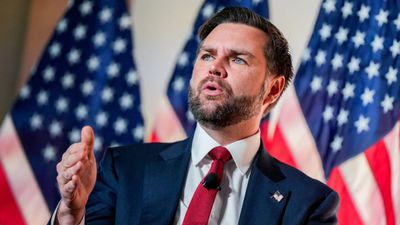 Why Is JD Vance Heading To Pakistan? Key Reasons Behind The Visit And What It Means For US–South Asia Relation
 -
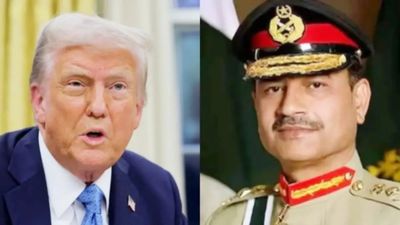 Pakistan's Overnight Diplomacy is Real, But Washington Has Long Memories, Beijing Has Longer Ones
 -
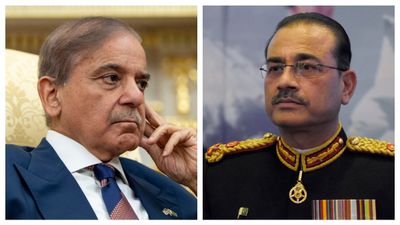 Pakistan Likely To Host US-Iran Talks In Islamabad On Friday
 -
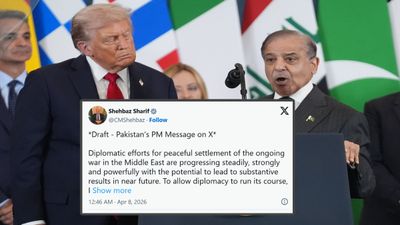 Did US Write Pakistan’s PM Shehbaz Sharif's Tweet To Trump On Iran Ceasefire Talks?
 -
 Iran’s Supreme Leader Mojtaba Khamenei Recovering From Airstrike Injuries, Reportedly Has Disfiguring Wounds
 -
 Iran War: US To Host Israel, Lebanon Peace Talks
 -
 Crude Oil Price Today - April 11: Brent Dips To $95.20 - Check Rates Per Barrel for WTI, Murban, Dubai Crude



 Click it and Unblock the Notifications
 Sign in with Google