


Govt Slashes Petrol Excise To Rs 3, Cuts Diesel Duty To Zero Amid Strait Of Hormuz Supply Shock


In a major relief measure aimed at shielding the domestic market from a worsening global energy crisis, the Centre on Friday sharply reduced excise duty on petrol and diesel by Rs 10 per litre each. The decision lowers excise duty on petrol to Rs 3 per litre from Rs 13, while diesel will now attract zero excise duty, down from Rs 10 per litre.

AI-generated summary, reviewed by editors
The move comes as India grapples with severe volatility in global crude markets following the escalating US-Israel-Iran conflict and Tehran's blockade of the Strait of Hormuz, one of the world's most crucial oil transit routes.
Strait of Hormuz Crisis Pushes India To Rework Fuel Taxes
The government's decision comes against the backdrop of a deepening international energy supply shock linked to the closure of the Strait of Hormuz, a strategic corridor through which nearly one-fifth of global crude oil and gas supplies pass.
The route is estimated to handle around 20-25 million barrels of oil and gas per day, making it one of the most important chokepoints in the global energy trade. Before the conflict intensified, India sourced roughly 12-15% of its crude imports through this corridor, underlining the significance of the disruption for the country's energy security.
With global crude prices remaining highly volatile amid geopolitical tensions in West Asia, the excise cut is expected to ease pressure on oil marketing companies (OMCs) and help soften the domestic impact of rising import costs.
Petrol And Diesel Get Relief, But ATF Faces Fresh Tax Burden
While petrol and diesel have received substantial tax relief, aviation turbine fuel (ATF) has been hit with a new levy under the revised duty framework.
The government has introduced a special additional excise duty of Rs 50 per litre on aviation turbine fuel. However, due to exemptions and adjustments, the effective duty is expected to be much lower, at around Rs 29.5 per litre.
This signals a clear split in the government's fuel taxation strategy. Road fuels, which directly affect household budgets and transport inflation, have been given relief, while aviation fuel is being taxed more aggressively.
The revised structure suggests policymakers are trying to balance consumer relief with revenue protection, while also prioritising sectors seen as more sensitive to inflationary pressures.
Export Rules Tightened To Protect Domestic Fuel Availability
Alongside the excise duty reduction, the government has also tightened fuel export rules in a bid to preserve domestic supplies during a period of global uncertainty.
Broad-based excise exemptions that were earlier available on exports of petrol, diesel and ATF have now been withdrawn. Under the new framework, export-related benefits will only be available for specific and clearly defined categories, indicating a more selective and restrictive policy approach.
This step is widely seen as part of a broader effort to ensure that domestic fuel availability remains stable even as global supply chains come under pressure.
The government appears to be signalling that in the current crisis, domestic energy security will take precedence over broader export incentives.
Nepal, Bhutan, Bangladesh And Sri Lanka Still Get Exemptions
Despite the tougher export regime, the Centre has retained some important exemptions.
Supplies made by public sector oil companies to neighbouring countries including Nepal, Bhutan, Bangladesh and Sri Lanka will continue to receive preferential treatment. In addition, previously approved export consignments will not face retrospective changes, offering some relief to refiners and exporters with existing contractual obligations.
These carve-outs indicate that while India is tightening the overall framework, it is still maintaining strategic regional commitments and avoiding disruptions to already cleared shipments.
Major Reset In India's Fuel Tax Policy
The latest changes mark one of the most significant recalibrations of India's fuel tax structure in recent months.
By sharply cutting excise duty on petrol and diesel, imposing a selective burden on aviation fuel, and curbing export benefits, the government appears to be crafting a targeted response to an extraordinary external shock.
The policy is designed to support domestic consumers and oil marketing firms at a time when international prices remain unstable and supply routes are under threat. It also creates a distinct hierarchy in fuel taxation, with petrol and diesel seeing maximum relief while ATF bears a heavier burden.
For consumers, the biggest immediate takeaway is that the government is attempting to cushion the impact of the global oil crisis on road fuel prices. For refiners and exporters, the changes signal a tighter operating environment as India prioritises supply stability at home.
In effect, the move reflects a broader strategic shift in India's energy policy as geopolitical risks begin to reshape taxation, trade and fuel availability decisions.
-
 Congress Candidate List for Tamil Nadu Elections 2026 Out - See Full List
 -
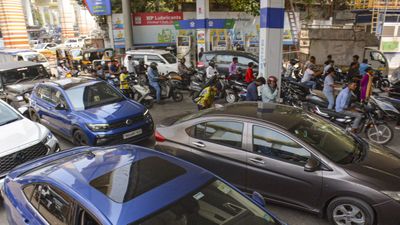 Petrol Price India Vs Pakistan: Why Fuel Is Cheaper In India Than Pak Despite Global Crisis
 -
 New OTT Release This Week In Telugu, Hindi, Tamil, Marathi, Malayalam: 40 Movies & K Dramas To Watch
 -
 Gold Silver Rate Today, 3 April 2026: City-Wise Prices, MCX Gold Down, Silver Slides Amid Global Pullback
 -
 Gold Rate Today 3 April 2026: Latest IBJA Rates, Tanishq, Kalyan Jewellers, Malabar, Joyalukkas 22K Prices
 -
 Earthquake Tremors Felt In Delhi-NCR, Parts Of North India After 5.9-Magnitude Afghanistan Quake
 -
 Baba Vanga Prediction 2026: World War 3, UFOs, Cash Crash, Truth About Nostradamus of the Balkans Claims
 -
 Iran Shoots Down Second US F-35 Fighter Jet, Pilot Survival Unlikely
 -
 Biker Movie Review: What's Good, What's Bad In Sharwanand's Telugu Film?
 -
 Kerala Pre-Poll Survey: Can LDF Retain Power In Keralam? Check This Opinion Poll
 -
 Annamalai Missing from BJP’s List for Candidates For Tamil Nadu Polls - See 27 Names
 -
 US-Iran War: The End of Invisibility? How Iran May Be Seeing the 'Unseeable' F-35



 Click it and Unblock the Notifications
 Sign in with Google