


8th Pay Commission From January 1, 2026? Arrears, Salary Hike and DA Stand Explained


Central government employees and pensioners are likely to see salary revisions under the 8th Pay Commission take effect from January 1, 2026, even though the panel's recommendations are expected only by mid-2027.

AI-generated summary, reviewed by editors
A Cabinet note issued after a meeting on October 28, 2025, indicates that arrears could accumulate from the beginning of 2026, assuming the government opts for retrospective implementation, as seen in previous pay commissions.
The current 7th Pay Commission completes its tenure on December 31, 2025, making January 1, 2026 the logical cut-off date for the next revision cycle.
Why January 1, 2026 Is Seen as the Key Date
Employee unions say the date of effect is not clearly mentioned in the Terms of Reference approved for the 8th Pay Commission. However, they argue that revised salaries should become payable from January 1, 2026, since the 7th Central Pay Commission's term ends the previous day.
News18 quoted a source, "Generally, pay commissions are implemented with retrospective effect. Under the 8th Pay Commission also, we demand that the revised salaries should become due from January 1, 2026, as the term of the 7th Central Pay Commission ends on December 31, 2025. Accordingly, employees should receive arrears once the new pay panel is implemented. However, no date of effect is mentioned in the ToR. The 8th Pay Commission is expected to be implemented only by late 2027 or early 2028."
The source added that earlier pay commissions clearly mentioned the date from which revised salaries would apply, a clarity missing in the current framework. The Confederation of Central Government Employees and Workers has flagged this issue in a letter to Prime Minister Narendra Modi.
Delayed ToR and Composition of the 8th Pay Commission
The government announced the formation of the 8th Central Pay Commission in January 2025 to review salaries, pensions and allowances of central government staff. However, the Terms of Reference were approved only on October 28, 2025, a delay that has drawn attention from employee bodies.
The three-member commission is headed by Justice Ranjana Desai, retired judge of the Supreme Court. Pay Commissions are typically constituted every ten years to reassess pay structures, retirement benefits and service conditions across departments.
Fitment Factor Range and Possible Salary Increase
Employee representatives associated with the National Council Joint Consultative Machinery earlier indicated that the 8th Pay Commission could recommend a fitment factor similar to that of the 7th Pay Commission.
A July report by Ambit Capital projected the fitment factor to fall between 1.83 and 2.46. The firm stated, "As per back-of-the-envelope calculations, depending on the salary growth seen over different Pay Commissions, the range of fitment factors that the government could be looking at lies between 1.83 and 2.46."
If implemented within this range, the minimum basic salary could rise from the current Rs 18,000 to between Rs 32,940 and Rs 44,280 per month. A fitment factor of 1.83 would take the minimum pay to around Rs 32,940, while a factor of 2.46 would push it to Rs 44,280.
Ambit Capital estimates that the 8th Pay Commission could deliver a real pay hike of at least 14 per cent, with a theoretical upper limit of 54 per cent. However, the report cautioned that such a steep increase is unlikely due to fiscal constraints. "While the government might consider a higher increase, potentially using it as a consumption stimulus, expecting a substantial 54% jump seems unlikely, since it could face significant financing challenges," the report said.
More than 50 lakh central government employees and over 65 lakh pensioners are expected to benefit once the recommendations are implemented.
No Proposal to Merge DA With Basic Pay
The government has ruled out any plan to merge Dearness Allowance with basic pay under the 8th Pay Commission framework. Union Minister of State for Finance Pankaj Chaudhary clarified the position in Parliament earlier this month.
"No proposal regarding merger of the existing dearness allowance with the basic pay is under consideration with the government at present. In order to adjust the cost of living and to protect basic pay/ pension from erosion in real value on account of inflation, the rates of DA/ DR are revised periodically every six months on the basis of the All India Consumer Price Index for Industrial Workers (AICPI-IW) released by Labour Bureau, Ministry of Labour and Employment," Chaudhary said in a written reply in the Lok Sabha.
For now, central government employees will continue to see DA revisions every six months, independent of any future pay commission changes.
-
 Thunderstorm Warning In Delhi NCR: IMD Issues Orange Alert Amid Sudden Weather Shift
 -
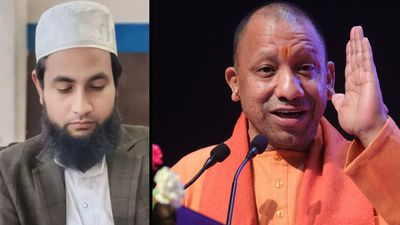 UP STF Nabs Maulana Abdullah Salim Over Controversial Comment On CM Yogi's Mother
 -
 Masood Azhar’s Brother Mohammad Tahir Dies In Pakistan Under Mysterious Circumstances, Cause Yet To Be Known
 -
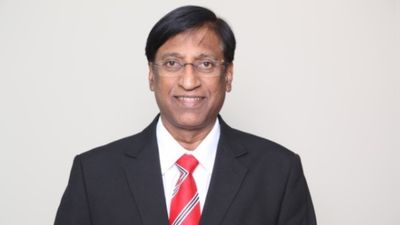 VerSe Innovation Appoints P.R. Ramesh as Independent Director and Chair of Audit Committee to Strengthen Governance Ahead of Next Phase of Growth
 -
 “Not Going To Be There Too Much Longer”: Trump Signals Endgame In Iran War
 -
 Iran Threatens To Hit US Companies in Region From April 1, Names Microsoft, Apple, Tesla, Boeing
 -
 ‘IPL Official’ Found Dead in Mumbai Hotel, Probe Underway
 -
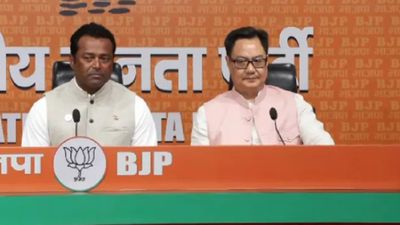 Leander Paes To Contest West Bengal Assembly Elections 2026? Tennis Star Joins BJP Ahead of Assembly Polls
 -
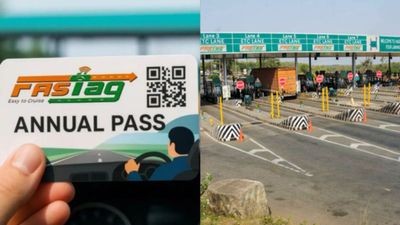 April 1 Rule Changes: PAN, New Tax Law, ATM, FASTag, Cards to Impact Millions, What’s Changing?
 -
 China, Pakistan Call for Immediate Ceasefire in Iran War, Push Peace Talks ‘As Soon As Possible’
 -
 Iran’s New Hormuz Plan Targets Global Shipping with Tolls, What Does It Mean?
 -
 Are Banks Closed or Open Today on Mahavir Jayanti? RBI Issues Special March 31 Instructions



 Click it and Unblock the Notifications
 Sign in with Google