


Oracle SCM expert Nabil Parkar reveals secrets to resilient manufacturing
Explore how veteran Oracle SCM architect Nabil Parkar is revolutionizing global manufacturing. With over 22 years of experience, Parkar shares his methodology for building compliant, flexible, and high-performing supply chain systems that empower organizations to navigate complex logistics, regulatory hurdles, and real-time operational demands with confidence and clarity.


The global manufacturing sector is increasingly confronted with challenges posed by intricate supply networks, stringent regulations, and the necessity for real-time oversight. As companies expand their operations internationally, they must navigate fluctuating demand, evolving compliance requirements, and complex logistics. Oracle Supply Chain Management (SCM) has emerged as an essential solution, enabling organizations to streamline procurement, inventory, order management, and shipping processes. Experts who possess a deep understanding of its various modules, such as Order Management, Inventory, and Procurement, are pivotal in transforming this technology into dependable, compliance-focused operations. Among these specialists is Nabil Parkar, an Oracle SCM architect with over 22 years of experience in developing compliant supply chain systems for manufacturing enterprises worldwide.
Parkar's career commenced in the field of warehouse and distribution, where he gained hands-on experience with inventory management, procurement, and order processing. This foundational operational exposure provided him with valuable insights into the practical dynamics of supply chains in real-world scenarios. He subsequently transitioned to enterprise system implementations, where he contributed to logistics platforms, including terminal operating systems utilized at major container ports. With over 17 years dedicated to Oracle SCM, Parkar has led the design and deployment efforts across various modules, including Order Management, Shipping Execution, Procurement, and Inventory. A significant aspect of his work has involved orchestrating large-scale ERP rollouts in Europe, Asia, and North America, where he harmonized supply chain processes across manufacturing plants and distribution centers while adhering to regional regulations.
AI-generated summary, reviewed by editors

The expert has also addressed challenging integration issues, such as connecting Order Management Cloud with Transportation Management, to minimize manual coordination and accelerate order-to-shipment cycles. In multi-warehouse settings, he has designed inventory allocation strategies that enhance efficiency and reduce fulfillment delays that result from uncertainty. For a prominent company in metals and natural resources, he played a key role in stabilizing supply chain operations during critical go-lives, leading teams of 10 to 50 professionals across operations, finance, logistics, and IT departments. Additionally, he incorporated governance checkpoints into transactions, thereby reinforcing audit trails and compliance in regulated, export-driven environments.
As the strategist added, "Stability in supply chains doesn’t come from perfect technology alone, it comes from systems that support people, not the other way around."
His methodology also prioritizes continuous learning and adaptation, viewing each implementation as an opportunity to enhance organizational responsiveness to disruptions. By integrating real-time visibility into procurement, inventory, and shipping workflows, he empowers teams to identify bottlenecks early and make swift adjustments without the need for comprehensive system overhauls. This forward-thinking mindset is particularly critical as global manufacturing grapples with shorter lead times, stricter regulations, and heightened customer expectations. Rather than pursuing isolated solutions, he emphasizes the importance of designing flexible, repeatable architectures that can be readily adapted and scaled across different regions.
Looking towards the future, supply chain systems are evolving from basic record-keeping to intelligent, governed networks. Cloud-first platforms, AI-driven analytics, and improved integration with logistics and transportation tools are becoming the norm. Architects like Parkar play an essential role in this transformation, converting intricate Oracle SCM landscapes into resilient frameworks that empower global manufacturing to operate with enhanced clarity, control, and confidence.
-
 Yakov Goldovsky and His Latest Research in Transport and Information Security
 -
 India Avoided Hitting Terror Camps During Namaz In Operation Sindoor: Army Chief
 -
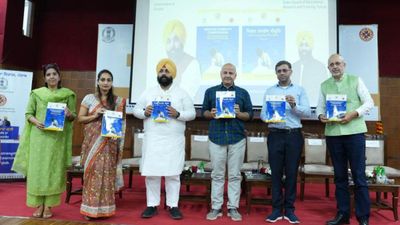 Mission Samrath 4.0 Takes Punjab’s Shikhya Kranti To Next Level With Attendance-Linked Reform: Harjot Singh
 -
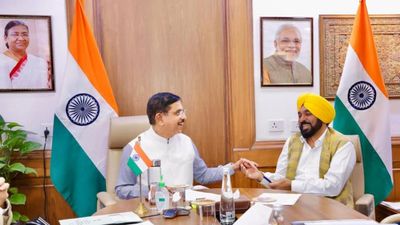 Hopeful For ₹4.75 Per Quintal Increase In Arhtiyas’ Commission On Paddy & Wheat: CM Bhagwant Singh Mann
 -
 Kamal Haasan Slams System After ‘Jana Nayagan’ Leak, Says It Was ‘Not An Accident But A Systemic Failure’
 -
 Layoffs: 70,000 Jobs Lost In 3 Months In 80+ Companies Including Oracle, Meta
 -
 VerSe Innovation Appoints Prasanna Prasad as Chief Product and Technology Officer to Accelerate AI-Led Product and Platform Innovation
 -
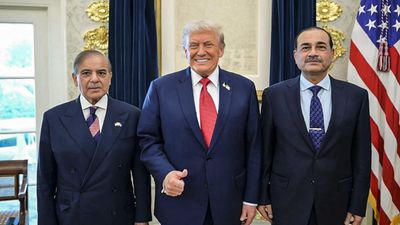 How US Pushed Pakistan For a Deal With Iran Over Oil Price Concerns
 -
 Only 'Grown-Ups' Modi, Putin, Jinping Can Save The World: Jeffrey Sachs As Iran-US War Intensifies
 -
 Rajasthan fuel supply update: LPG, petrol, diesel, and ATF stocks adequate, officials say
 -
 Farmer registry to link Uttar Pradesh schemes, says Yogi Adityanath, with priority procurement access
 -
 Mukul Choudhary Stars For LSG In Kolkata Knight Riders vs Lucknow Super Giants Game, Scores Fifty In IPL 2026



 Click it and Unblock the Notifications
 Sign in with Google