


Tamil Nadu Elections: How DMK, AIADMK Performed In Rural & Urban Seats In 2021 Polls - Decoded


The 2021 Assembly election in Tamil Nadu did more than just change the government, it revealed a sharp and telling divide between urban and rural voting behaviour. The verdict marked a decisive return of the Dravida Munnetra Kazhagam-led alliance, but beneath that headline lay a nuanced geography of support that shaped the outcome.
Across the state's 234 constituencies, classified broadly into 154 rural, 30 semi-urban and 50 urban segments, the DMK alliance demonstrated remarkable consistency, though its strength peaked in cities. The front secured an impressive 80% strike rate in urban constituencies, winning 40 out of 50 seats.
AI-generated summary, reviewed by editors

Its dominance tapered slightly in semi-urban areas with a 76% strike rate (23 seats), and further in rural regions where it still managed a solid 62% (96 seats). This spread ensured a comfortable tally of 159 seats, well above the majority mark, according to a report in The Times of India.
In contrast, the All India Anna Dravida Munnetra Kazhagam alliance struggled to keep pace, especially in urban Tamil Nadu. Of the 75 seats it won, a substantial 58 came from rural constituencies, underlining its relatively stronger grassroots presence. However, its performance dipped significantly in semi-urban (7 seats) and urban (10 seats) areas.
Vote share patterns further highlighted this divide. The DMK alliance maintained a balanced vote share across regions - 44.9% in rural, 45.8% in semi-urban and 46.6% in urban constituencies, suggesting a broad-based coalition. The AIADMK alliance, however, saw a reverse gradient: its vote share was highest in rural areas at 41.8%, but dropped to 37.2% in semi-urban and further to 34.8% in urban centres. This divergence played a crucial role in amplifying the seat gap despite a relatively modest overall vote share difference of 5.7 percentage points (45.4% vs 39.7%).
| Region | Total Seats | DMK Alliance | AIADMK Alliance |
|---|---|---|---|
| Rural | 154 | 96 | 58 |
| Semi-Urban | 30 | 23 | 7 |
| Urban | 50 | 40 | 10 |
| Total | 234 | 159 | 75 |
Smaller players added another layer to the story. The Makkal Needhi Maiam, led by actor-politician Kamal Haasan, failed to win any seats but showed a distinctly urban footprint. While its overall vote share stood at 2.7%, it rose sharply to 7.2% in urban constituencies, compared to just 1.2% in rural areas. This indicated a niche but notable appeal among urban, often younger voters, the TOI data claimed.
A look back at the 2016 Assembly election offers an illuminating contrast. That year, the AIADMK-contesting largely on its own-crafted its victory on the back of strong rural and semi-urban performance. It posted a 61% strike rate in rural areas (94 seats), 57% in semi-urban (17 seats), and a still-respectable 46% in urban constituencies (23 seats). The DMK alliance, though competitive, lagged behind in rural regions with a 38% strike rate, but showed relative strength in urban areas with 54%.
Interestingly, the vote share gap in 2016 between the two major fronts was razor-thin-just 1.1 percentage points (AIADMK at 40.8% and DMK alliance at 39.7%). Even then, the DMK alliance had a slight edge in urban vote share, securing 40.7% against the AIADMK's 40.4%, hinting at a trend that would fully manifest in 2021.
It is interesting to note that 5 lakh votes decided the winner and the runner up in the 2016 polls.
Other alliances and parties also reflected the rural-urban split. The DMDK-led front in 2016 had a modest but visible presence across segments, while the PMK performed better in rural areas than in cities. The BJP-led NDA, though marginal overall, showed relatively higher support in urban pockets.
| Year | Alliance | Rural Seats | Semi-Urban | Urban | Total |
|---|---|---|---|---|---|
| 2016 | AIADMK | 94 | 17 | 23 | 134 |
| 2016 | DMK Alliance | 59 | 12 | 27 | 98 |
| 2021 | DMK Alliance | 96 | 23 | 40 | 159 |
| 2021 | AIADMK | 58 | 7 | 10 | 75 |
Taken together, the electoral data from 2011, 2016, and 2021 suggests a gradual but clear shift. Urban Tamil Nadu has increasingly leaned towards the DMK and its allies, driven perhaps by issues such as governance, infrastructure, and social welfare narratives that resonate strongly in cities.
Meanwhile, the AIADMK's traditional strength in rural areas, though still significant, has not been sufficient to counterbalance its urban decline.The 2021 verdict, therefore, was not just a swing, it was a structural realignment. The widening rural-urban divide in voting behaviour reveals how geography, demographics, and evolving voter priorities are reshaping the political landscape of Tamil Nadu.
-
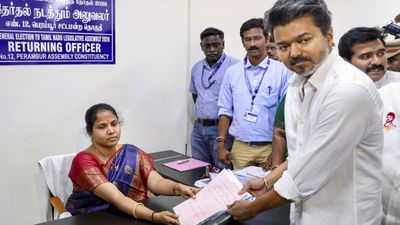 Affidavit Mismatch: Could a 2025 Madurai Case Disqualify Vijay From Perambur Race?
 -
 Did Vijay Really Get Rs 250 Remuneration For Jana Nayagan? Affidavit Raises Doubts
 -
 Are DMK-AIADMK Sidelining Muslim Candidates? Data Shows Decline In Community's Representation In TN Politics
 -
 Gold Rate Today 2 April 2026: Latest IBJA Gold Rates, Tanishq, Kalyan, Malabar, Joyalukkas 22K Prices
 -
 Gold Rate Today in Bangalore, April 3, 2026: IBJA Rates, 22K Gold Prices at Bhima, Abharan, Jos Alukkas, GRT
 -
 Gold Rate In Bangalore Today, 2 April 2026: IBJA Benchmark Rates, Bhima, Abharan, Jos Alukkas, GRT Prices
 -
 Hyderabad Gold Silver Rate Today, 3 April 2026: Fresh Gold and Silver Rates in the City
 -
 Purple Halcyon Aka Ashwani A: Who Is This Instagram Viral Girl Earning ₹70 Lakh via Subscriptions?
 -
 Civil Defence Mock Drill in Delhi At 8 PM Today: Full Schedule of Locations and Timings Released
 -
 April 3 Dry Day In Tamil Nadu Or Not? Status of Bars, TASMAC & Liquor Shops On Good Friday
 -
 Can Raghav Chadha Be The PM? How His Parliament Speeches On Real Issues Won Public Attention
 -
 Hyderabad Gold Silver Rate Today, 2 April 2026: Know Latest Gold and Silver Prices In Nizam City



 Click it and Unblock the Notifications
 Sign in with Google