


Rupee Falls to Fresh Record Low of 95.14 per Dollar Amid RBI FX Rule Changes
The Indian rupee slid to a fresh record low as regulator actions, arbitrage activity, and importer hedging interacted with global dollar strength. The session highlighted market-led fundamentals and RBI communications aimed at curbing speculative positions while underlying economic indicators remained sound.


The Indian rupee weakened to a fresh record low of 95.14 per US dollar on 30 March 2026. Early gains faded as arbitrage trades and strong importer demand overturned the morning rally. The move followed recent Reserve Bank of India rule changes in foreign exchange markets, even as government officials stressed that economic fundamentals remain sound.

AI-generated summary, reviewed by editors
Finance Minister Nirmala Sitharaman said underlying indicators for India stayed strong and should be read globally. The Finance Minister noted that several Asian currencies had fallen more sharply against the US dollar in recent weeks. The moves followed geopolitical tensions, including the continuing conflict in West Asia, which supported the US currency.
Indian rupee record low and intraday volatility
The rupee started Monday’s session much stronger at 93.60 per dollar, gaining over 1% at the open. Buying interest quickly faded as the trading day progressed. The currency then slipped past the 95 mark for the first time, ending at 95.14 against the US dollar, as dollar demand from importers intensified.
Traders linked the choppy price action to regulatory changes by the Reserve Bank of India. The central bank had recently tightened banks’ foreign exchange position limits. Banks reduced dollar holdings in the onshore market and added exposure in the non-deliverable forward market. This created pricing gaps which many corporates used for arbitrage.
| Metric | Detail |
|---|---|
| Date | 30 March 2026 |
| Opening level | ₹93.60 per US dollar |
| Record low level | ₹95.14 per US dollar |
| Estimated repositioning flows | $25 billion to $35 billion |
| Typical one-month NDF-onshore spread | 1–5 paise |
| Peak one-month NDF-onshore spread | Over ₹1, later easing to 40–50 paise |
Indian rupee, RBI measures and arbitrage trades
The gap between onshore and offshore prices opened up arbitrage trades for corporate players. Companies bought dollars onshore and sold them in the offshore non-deliverable forward market. Market participants estimated related repositioning flows at around $25 billion to $35 billion. The one-month NDF-onshore spread, usually 1–5 paise, widened sharply.
At one stage, that spread exceeded ₹1 before cooling to about 40–50 paise. Dealers said those levels still encouraged arbitrage trades and limited any upside for the rupee. Alongside these flows, steady dollar buying by large importers, hedging near-term obligations, added pressure on the Indian currency throughout the session.
According to Madhavi Arora, Chief Economist, Emkay Global, the Reserve Bank of India action was more about communication than a major policy shift. "The aim of the circular is likely to convey that the RBI is closely monitoring markets, rather than to materially impact currency levels," she said. Arora added that this helped explain the rupee’s failure to hold early gains.
Indian rupee pressures, global context and importer demand
Arora said the move mainly sought to discourage heavy speculative positions and aggressive arbitrage, given low overnight domestic rates. Arora also believed the broader outlook for the rupee had not changed. "The policy intent is not to alter the fundamental trajectory of the INR, which continues to face pressure from adverse terms of trade and a 'capital account drought', but to prevent speculative bets—both onshore and offshore—from amplifying the move," she said.
Government officials repeated that the rupee remained market-determined and shaped by several factors. These included global dollar strength, cross-border capital flows, and trade balances. With the currency sliding to 95.14 per US dollar amid arbitrage flows and importer hedging, authorities signalled close monitoring of markets while continuing to cite stable macroeconomic fundamentals.
-
 Bengaluru to Hyderabad Travel Set to Get Faster with 130 kmph Rail Upgrade, Travel Time to Drop
 -
 Hardik Pandya Set For 10 Over ODI Role At 2027 World Cup
 -
 Shashi Tharoor Convoy Stopped in Kerala's Malappuram, Security Personnel Allegedly Assaulted During Campaign
 -
 Gold Rate Today in Bangalore, April 4, 2026: IBJA Rates, 22K Gold Prices at Bhima, Abharan, Jos Alukkas, GRT
 -
 Delhi To Set Up SPCAs In All 13 Districts, Rebuild Dilapidated Veterinary Hospitals: CM Rekha Gupta
 -
 Iran Shoots Down Second US F-35 Fighter Jet, Pilot Survival Unlikely
 -
 Gold Rate Today 4 April 2026: Check Fresh IBJA Gold Rates, Tanishq, Kalyan, Malabar, Joyalukkas Prices
 -
 ICE Arrests Soleimani’s Niece and Daughter in LA Amid Lifestyle Claims
 -
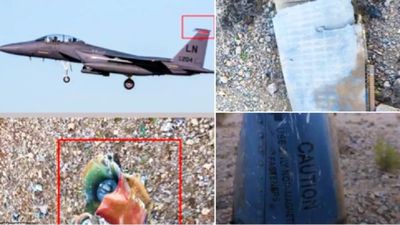 US Air Force’s ‘Swiss Army Knives’ Lead High-Risk Search And Rescue Mission For Missing Pilot In Iran
 -
 Iran Names 8 Gulf, Jordan Bridges as Possible Targets After Deadly Karaj Strike
 -
 'Behind Enemy Lines' For Real: F15 US Pilot Rescue Unfolds Deep Inside Iran
 -
 How Iran Brought Down US Military A-10 ‘Warthog’: IRGC Releases Video



 Click it and Unblock the Notifications
 Sign in with Google